PHYSICS
Why tea climbs in
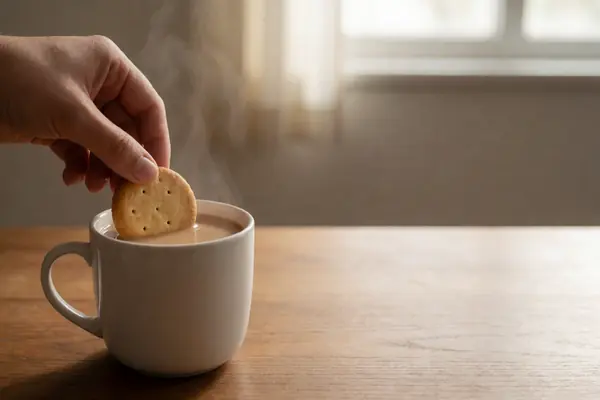
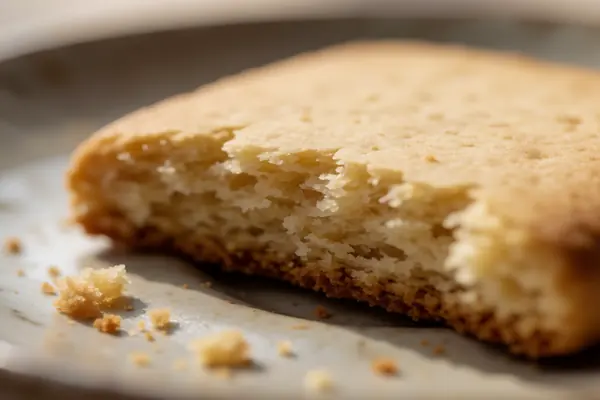
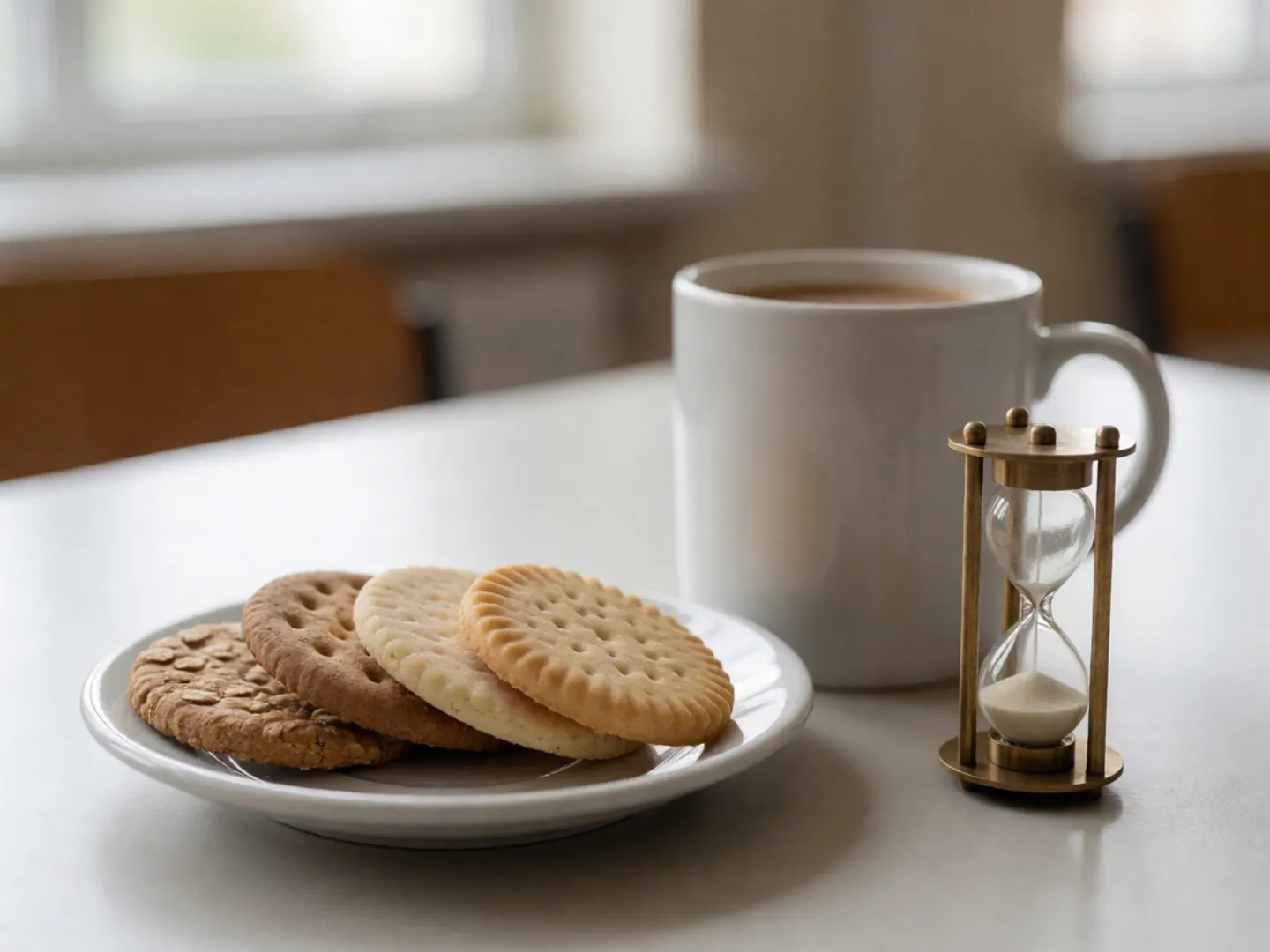
A biscuit is porous, so capillary action draws the liquid into the gaps between the crumbs. Washburn's 1921 equation describes this kind of flow.
The equation doodledunkin
THE PHYSICS OF A TEA BREAK
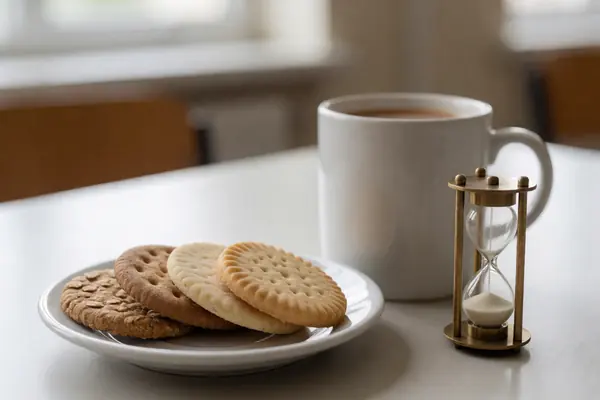
A biscuit is full of tiny gaps, and tea loves to climb into them.
Compare biscuits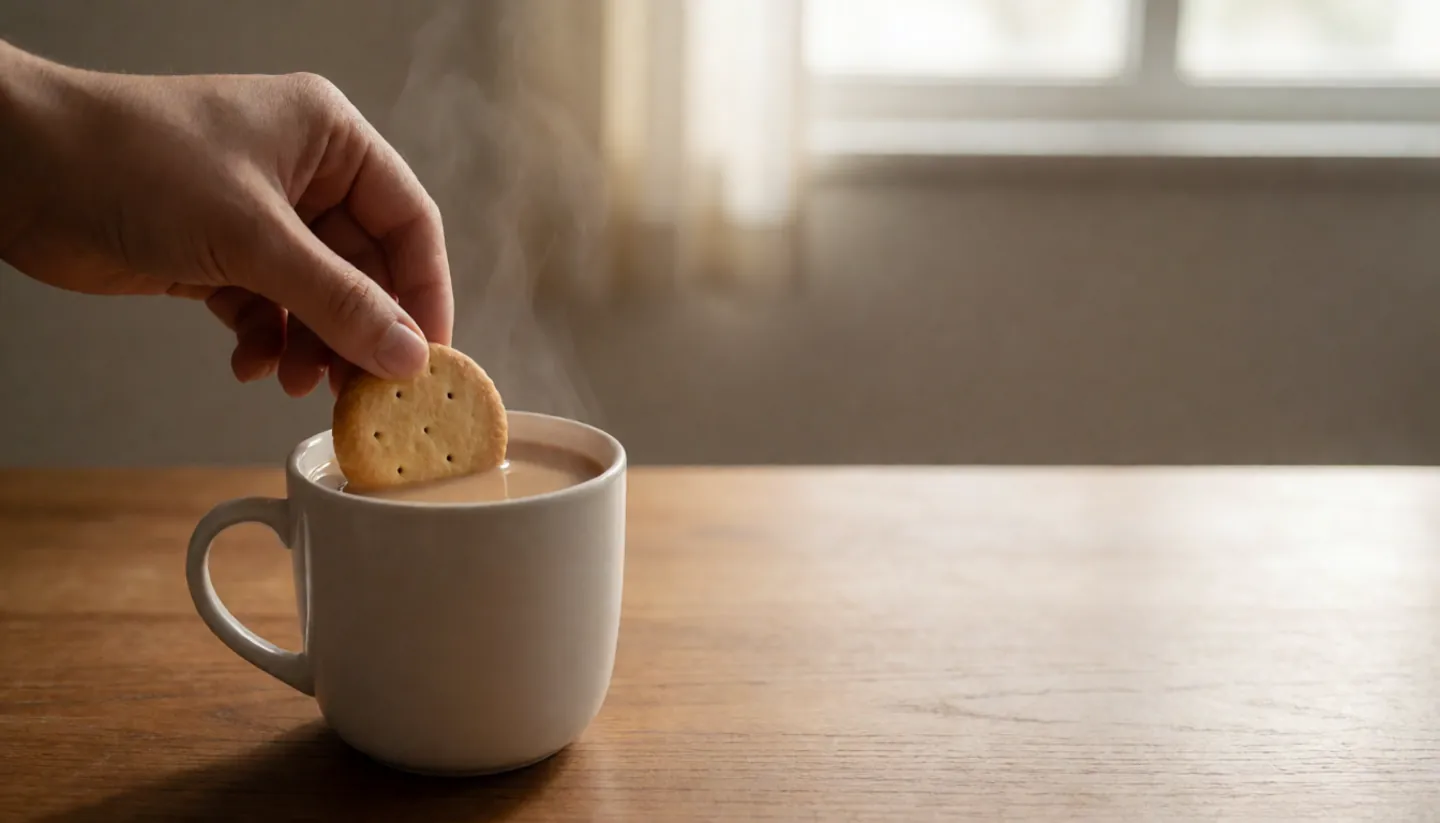
TWO SECONDSthen lift it out
Dunking softens a biscuit and releases flavour, but the same capillary action that draws the tea in also weakens it. This independent guide explains the physics and what two doctors measured when they tested four everyday biscuits in a hospital staff room.
Updated
THE SHORT ANSWER
The tea gets in by capillary action.
How long the biscuit lasts depends on the biscuit.
PHYSICS
A biscuit is porous, so capillary action draws the liquid into the gaps between the crumbs. Washburn's 1921 equation describes this kind of flow.
The equationTHE TEST
In a 2022 BMJ study, an oat biscuit dunked for two seconds lasted 29 seconds before falling apart, the longest of four types tested.
Compare the fourTHE TEA
The same study found every biscuit shortened the time until tea reached 61ºC, the drinking temperature the authors agreed on.
See the numbersA QUICK BISCUIT CHECK
Pick a plain biscuit to see how long it held together after a two-second dunk in the BMJ staff-room test. The bar shows how well it survived.
From the Direct Uptake of Nutrition and Caffeine Study (BMJ, 2022), a light-hearted Christmas paper using four round, non-chocolate biscuits and repeated tests.
TWO NUMBERS WORTH KNOWING
The BMJ study timed how long a mug of tea
takes to cool to a comfortable drinking temperature.
82ºC
Median temperature of a fresh mug
After 240 mL of freshly boiled water was poured onto a tea bag in an unwarmed mug, the tea started at a median of 82ºC, and then cooled by about 1ºC every 30 seconds.
FRESH CUP · BMJ 2022
370 seconds
Time to reach 61ºC with 40 mL milk
With 40 mL of milk the tea reached the agreed drinking temperature of 61ºC after a median of 370 seconds. Dunking a digestive brought that down to 240 seconds.
READY TO DRINK · BMJ 2022
Freshly boiled water carries a risk of scalding, which is why the authors measured cooling time. The study was a light-hearted Christmas paper by two hospital consultants in Cardiff.
FOUR THINGS THE TEST SUGGESTS
These come straight from what the study measured. They are not rules, just what happened in one careful staff-room experiment.
The test dunked each biscuit for two seconds; even then, the weakest fell apart soon after.
The authors used thumb and index finger, which they called the universal dunking grip.
A fresh mug started at 82ºC and took around six minutes to reach 61ºC with milk.
Oat held together longest; digestive kept its crunch best; rich tea soaked up most.
THE EQUATION IN THE NEWSPAPERS
In 1998 University of Bristol physicist Len Fisher's light-hearted experiments on dunking biscuits in tea or coffee made headlines. Physics World reported that the coverage leaned on the Washburn equation, first derived in 1921, which explains capillary flow in porous materials.
In its general form the equation says the distance a liquid soaks in grows with the square root of time, depending on the pore size, the liquid's surface tension and its viscosity. Writing in Nature in 1999, Fisher said the equation was published in almost every major UK newspaper.
Questions
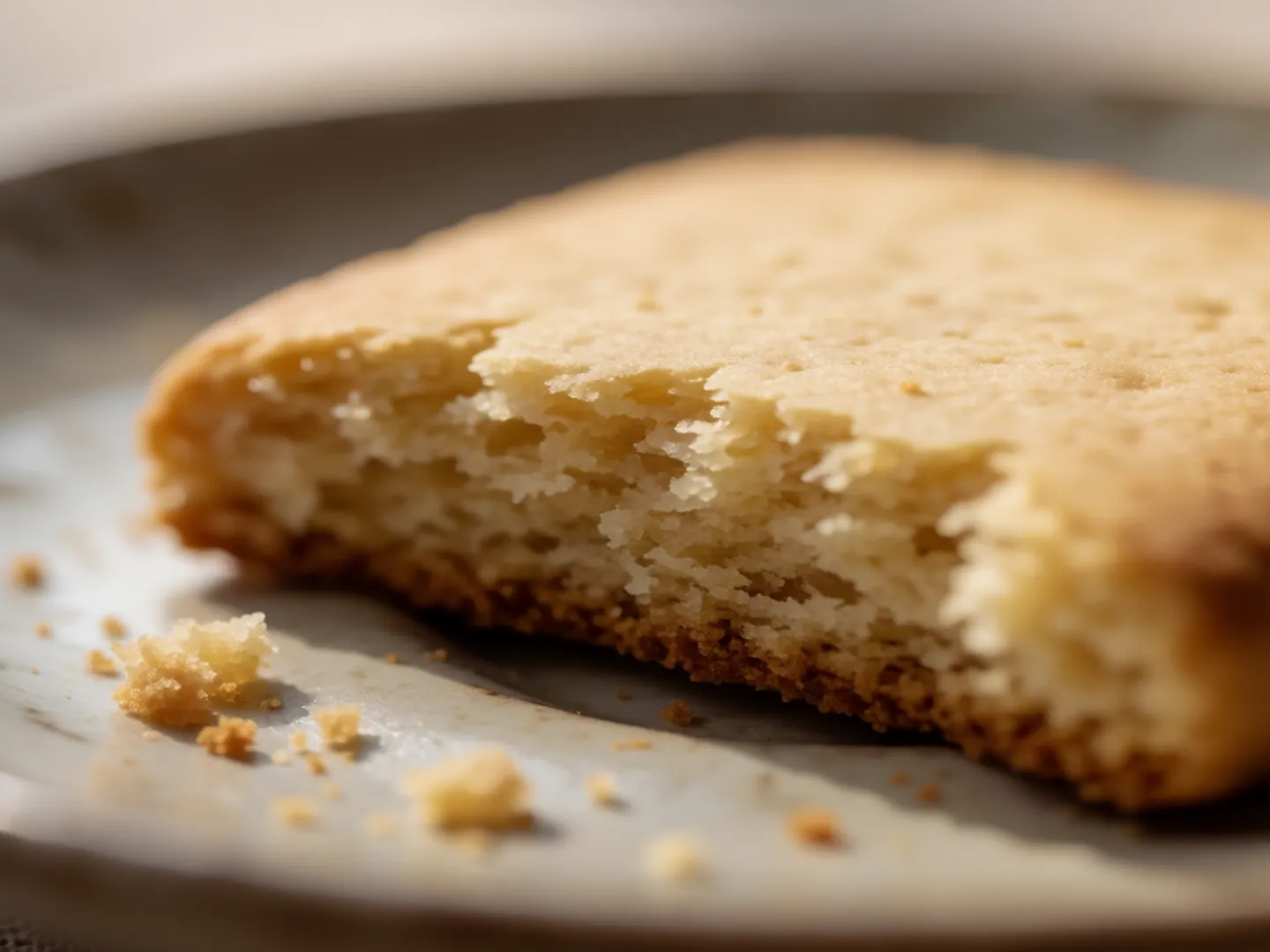
A biscuit is porous. When it is dunked, capillary action draws the liquid into the gaps between the crumbs, the same effect that pulls water up a narrow tube.
It describes capillary flow in porous materials. In its general form, the distance a liquid penetrates grows with the square root of time, set by pore radius, surface tension and viscosity. Washburn published it in 1921.
In a 2022 BMJ study of four plain round biscuits, the oat biscuit lasted 29 seconds after a two-second dunk, ahead of the shortie at 17.5 seconds and the digestive at 8.5 seconds.
Yes, in that study. Dunking biscuits at 30 and 60 seconds shortened the time for tea to reach 61ºC for all four types, most of all for the digestive.
Dunking softens the texture and helps release flavour by dissolving sugars. Sailors in the 16th century are said to have dunked hard ship's biscuits to soften them.
ABOUT THIS NAME
doodledunkin.com is part of the DoodleSale portfolio. It isn't in an auction right now, but you can ask about leasing it.